App
Custom Development: How it works
Descubra como funciona o desenvolvimento à medida e porque pode ser a solução certa para escalar o seu negócio online com mais performance.
6 min read
Almost all businesses create their first website in the same way: they choose a template, adapt the colours, add the logo and launch it.
At first, it seems sufficient. But as the business grows, that website is no longer enough.
The truth is that a generic website can work when you're starting out. But if you really want to scale up, gain authority, and provide a seamless experience for your customers, you'll need more than that.
In this article, we explain how bespoke development works: what it is, how it is done, and when it makes sense to invest in it.
No technical jargon. Just what you need to know to understand whether this solution is (or isn't) the right next step for your company.
The Problem with Generic Websites
There is nothing wrong with starting with a simple website. In fact, it is often the smartest choice when validating an idea or taking your first steps online.
However, over time, many businesses encounter the same problem: the website no longer meets the company's needs.
It has become [slow](https://cpluz.com/blog/why-your-websites-slow-loading-speed-is-killing-your-conversion-rate-optimize-in-5-steps/? srsltid=AfmBOoqSy-1OyRMUHADuYBNCExJlXG78Iwde2eWaQo4Nl8REuFjbqDqQ), limited, difficult to update or, worse still, no longer conveys professionalism.
This is where you begin to see the difference between a mass-produced website and a website designed for a specific business.
Most generic solutions force you to adapt to what already exists. Customised development does the opposite: it adapts to your company.
Without a customised solution, you end up accumulating patches: plugins that do not work well together, features that do not exist or fail, integrations that generate errors, and time wasted trying to solve problems that should not exist.
Before you know it, you're losing leads, sales, and opportunities just because your website isn't keeping up.
This is where it makes sense to understand how bespoke development works. Because it's not just about aesthetics or personal taste. It's about strategy.
What is Bespoke Development?
When we talk about customised development, we are referring to digital solutions created from scratch, based on the specific needs of your company.
Unlike pre-made platforms or generic templates, here everything is designed around you: your goals, your audience, your internal processes, and the experience you want to offer.
It's not just about having a beautiful website or one that stands out from the rest. It's about creating a tool that works for your business.
A solution that integrates with the systems you already use, grows with you, and solves real problems instead of creating new ones.
While a template-based website forces you to fit within limitations, bespoke development sets you free. It gives you complete control over functionality, design, structure, security, and performance.
That is why so many growing companies end up following this path. Because sooner or later, they realise that what brought them this far is no longer enough to take them further.
How Custom Development Works Step by Step
For many, customised development still seems complex, technical or far removed from reality. But the truth is that this process is much simpler (and more strategic) than one might imagine.
As long as it is done with a partner who knows what they are doing.
Below we explain, step by step, how custom development works at Apollotec.
Phase 1: Diagnosis and Planning
It all starts with an initial meeting.
Before writing any lines of code, the technical team needs to understand your business:
- What are the objectives?
- Who are the customers?
- What already exists
- Where are the roadblocks?
- What results do you want to achieve?
Here, the scope of the project, priorities, and desired functionalities are defined.
Phase 2: Prototype and Design
At this stage, interactive mock-ups (prototypes) are created to show what the user experience will be like.
The design is created from scratch, adapted to the company's visual identity and focused on conversion.
Nothing is generic, everything is thought out in detail.
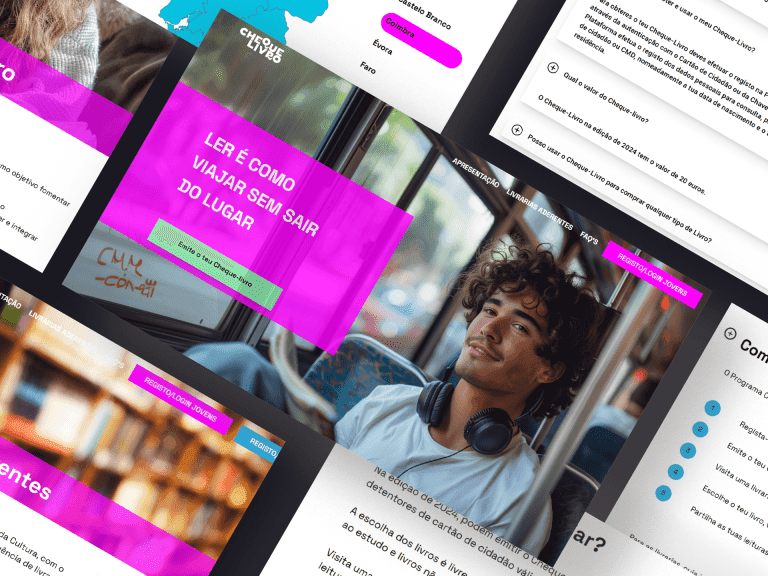
Apollotec developed the Cheque Livro platform.
Phase 3: Development
With the prototype validated, the development team steps in.
The website or platform is built using the most appropriate languages and technologies, always with a focus on security, performance, and flexibility.
Specific functionalities are integrated here, whether it be a booking system, a customer area, a smart catalogue or any other tailored solution.
Phase 4: Testing and Integration
Before launching, everything is tested:
- Compatibility with devices and browsers;
- Speed;
- Responsiveness;
- Integration with other tools (such as CRMs, ERP, payment gateways, etc.).
The aim is to ensure that nothing goes wrong when the project goes live.
Phase 5: Launch and Optimisation
After launch, the process does not end.
A good technical partner continues to monitor results, suggest improvements, and evolve the solution according to data, the market, and the company's growth.
Because a digital project is never “100% finished”. It is alive and evolving, just like human beings.
When is it Worth Investing in a Tailor-Made Solution?
Custom development is not for everyone. But in certain contexts, it can be exactly what separates a beautiful website from one that truly generates results.
Here are some scenarios where this solution makes all the difference:
- Does your company have exhaustive manual processes that generate errors?
- You have difficulty analysing the most relevant company data;
- The customer experience has been declining in quality;
- The systems are outdated;
- Note that you are unable to climb.
Falamos sobre cada um destes pontos mais a fundo neste artigo.
Conclusion
Custom development is not a luxury. It is a strategic decision for those who want a website, app or platform that really works, that conveys confidence, that keeps pace with the growth of the business and helps it sell more.
Throughout this article, we have demonstrated how bespoke development works, what sets it apart from generic solutions, and in which cases it makes sense to invest in it.
If you feel that your current digital solution is no longer meeting your company's needs, now may be the right time to take the leap.
Our suggestion: schedule a 30-minute meeting with Apollotec's technical team. No obligation.
Just to see if this solution is the right next step for your business.
FAQ'S
What is bespoke development?
Custom development consists of creating personalised digital solutions, built from scratch based on the specific needs of your business, as opposed to generic templates.
When does it make sense to invest in a tailor-made solution?
It makes sense when your current website cannot keep up with the growth of your company, has manual processes, outdated systems, or when you want to scale with greater efficiency and control.
What are the stages of bespoke development?
The process includes: Diagnosis and Planning, Prototyping and Design, Development, Testing and Integration, and finally Launch and Continuous Optimisation.
What is the difference between a generic website and a bespoke website?
A generic website forces the company to adapt to the limitations of the platform, while a bespoke website is fully tailored to the objectives, processes and needs of your business.
Is bespoke development very technical or complex?
Not necessarily. With the right partner, the process is clear, strategic and tailored to your company's reality, without unnecessary technical jargon.
Request a Quote
Solicita a tua proposta personalizada e descobre como as nossas soluções podem transformar o teu projeto e impulsionar os resultados da tua empresa.