Cloud
Cloud Servers or Physical Servers: Which is Best for Your Business?
Servidor Cloud ou Servidor Físico: descubra as vantagens de cada um e saiba como escolher a melhor opção para o futuro da sua empresa.
8 min read
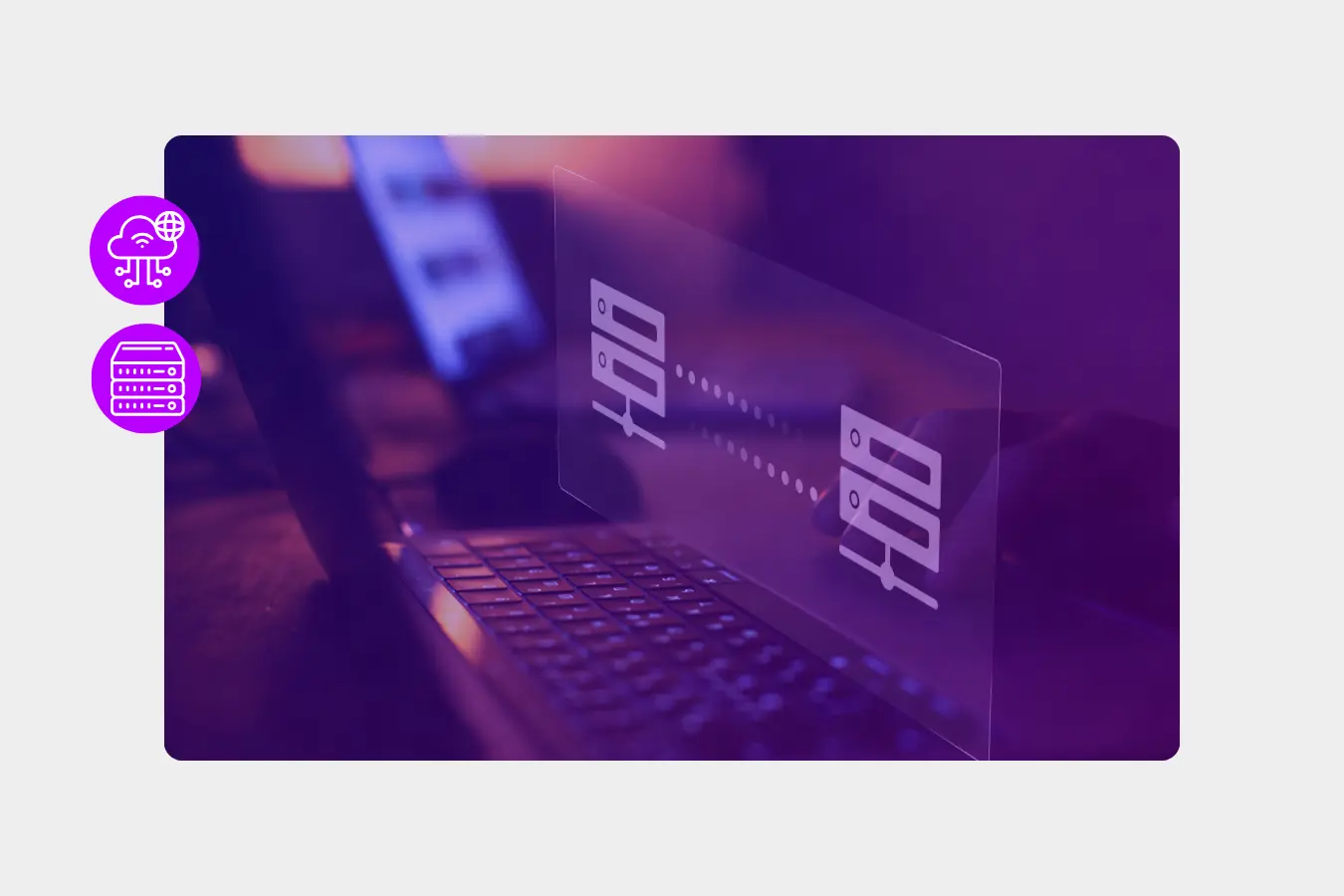
Your company is growing. Projects are increasing, data is accumulating, and suddenly you realise that it is no longer enough to have “a computer serving as a server”.
The time has come to invest in a more robust IT infrastructure. But the question arises: should you opt for a cloud server or a physical server?
This is a more important decision than it seems at first glance.
It can influence system performance, business scalability, data security and, of course, financial investment over time.
In this article, you will find a comprehensive and straightforward guide to help you make the best decision.
We will show you the advantages and disadvantages of each option, what you should consider before deciding, and which one best suits the future of your company.
What are Physical Servers?
A physical server is a machine installed on your company's premises. It is under your direct control, from configuration to security.
This model is traditional, but continues to be used by companies that value total control and customisation.
Advantages of Physical Servers
Absolute Control
With a physical server, the company has complete autonomy over the hardware, software, and data.
This gives you the freedom to tailor everything to your company's needs, even when they are most demanding.
Enhanced Physical Security
As the server is located within the company, access can be highly restricted.
This reduces the risk of unauthorised access, especially when there is no sharing with other entities.
Predictable Performance
All server resources are dedicated to your company. There is no sharing with other users, as is the case with some cloud services, which ensures stability and predictability in performance.
Legal Compliance
Some companies, particularly in the healthcare, banking, or legal sectors, prefer to keep data internally to ensure compliance with stricter legal regulations.
Disadvantages of Physical Servers

High Initial Cost
Purchasing servers, configuring infrastructure, investing in power, cooling, and physical space represents a significant investment right from the start.
Continuous Maintenance
A physical server requires an IT team to ensure updates, backups, troubleshooting, and replacement of parts. This translates into regular fixed costs.
Limited Scalability
If your business grows rapidly, you will need to purchase more equipment. And that takes time. Expansion is not immediate and can hinder the company's agility.
Complex Recovery
In the event of a fire, electrical failure, or attack, recovering data can be slow and costly. Implementing an effective contingency plan requires additional resources.
Obsolete Technology
Over time, hardware becomes outdated.
Replacing servers every few years can become an expensive and inefficient cycle.
What are Cloud Servers?
Cloud servers operate virtually Cloud servers operate virtually.
Instead of being physically installed at the company, they are provided by large platforms such as AWS, Microsoft Azure or Google Cloud.
The company accesses this infrastructure via the internet, adjusting resources as needed.
Advantages of Cloud Servers
Lower Initial Costs
There is no need to purchase hardware or set up a technical room.
The investment is spread out over time, depending on how you use the resources.
Fast and Flexible Scalability
Need more space, more processing power, or more memory? Simply adjust the settings.
You can scale resources up or down in minutes, without interruptions.
No Hardware Worries
Maintenance, updates, and physical security are the responsibility of the cloud provider.
Your team can focus on other tasks without worrying about servers failing.
High Availability
Cloud platforms have servers mirrored in multiple locations.
This means that even if there is a failure in one region, the system continues to function in another.
It is one of the most effective ways to ensure service continuity.
Remote Access
With a cloud server, the team can work from anywhere. All they need is an internet connection.
It is ideal for companies with remote teams or hybrid models.
Security Managed by Experts
Major suppliers invest millions in cybersecurity systems, encryption, and constant monitoring.
In many cases, they offer greater protection than an SME could implement on its own.
Disadvantages of Cloud Servers
Internet dependency
Without a stable connection, access to data and systems is compromised. It is essential to ensure a good network infrastructure.
Less Physical Control
Even if the data is protected, the physical server is not within your reach.
For some companies, this lack of control can cause discomfort.
Unpredictable Long-Term Costs
You pay for what you use. Without strict control, costs can rise significantly, especially with large data volumes or usage peaks.
Specific Legal Requirements
Some sectors require data to be stored within the country or under certain conditions.
The Cloud may not meet these requirements, depending on the location of the servers.
Cloud Servers or Physical Servers: which is best?
The choice between a cloud server or a physical server should be made based on the actual needs of your business.
Below, we have compiled the main factors you should consider before making a decision.
Are you concerned about the costs?
If you want a more controlled investment over time, the Cloud may be more advantageous.
But if you prefer a system with predictable costs and have the budget available from the outset, a physical server may be worthwhile.
The ideal approach is to evaluate the total costs — installation, maintenance, and growth — and not just the initial value.
Are you thinking of climbing?
If you anticipate an increase in users, data, or functionality in the coming months, the Cloud offers the flexibility you need. You can adapt resources in real time.
With a physical server, each expansion requires new hardware and waiting time.
Need complete control?
If you have specific technical requirements or want to manage everything internally, a physical server gives you complete freedom.
The Cloud imposes some limitations, but compensates with simplicity and automatic updates.
Does your industry have strict rules regarding data?
If you work in an area with strict legal requirements (such as healthcare or finance), you may need to ensure that data is physically stored in a specific location.
In such cases, the physical server helps to meet the requirements. If you do not have this limitation, the Cloud remains secure and reliable.
Do you have an IT team ready?
If you have an internal technical team that is proficient in server management, the physical option may be more suitable.
If you do not have this support or prefer that the infrastructure “works on its own,” the Cloud is a more practical choice.
Is your internet connection stable?
A good connection is essential for using the Cloud without interruptions.
If you are in an area with frequent outages, a physical server can prevent problems. But if you have reliable internet, the Cloud works smoothly.
Conclusion
There is no single answer for all companies.
The decision between a cloud server or a physical server depends on the reality of your business, the stage it is at, and the strategy you want to follow in the coming years.
Choose a physical server if:
- You want to have complete control over the infrastructure.
- Your company can afford a higher initial investment.
- You work in a sector with legal requirements that necessitate physical control of data.
- You have an in-house IT team capable of managing servers and security.
- The demand for resources is stable and predictable over time.
Choose a Cloud server if:
- You want to start with lower costs and pay only for what you use.
- You need to scale resources quickly as demand increases.
- You don't want to worry about hardware maintenance and updates.
- It values remote access and remote collaboration.
- Seeks high availability and system resilience.
What if you want the best of both worlds? There is also the option of a hybrid solution.
In this model, the company uses a physical server for the most sensitive and critical data, and uses the cloud for tasks that require flexibility, such as backups, document storage, or remote collaboration.
It may be the ideal combination for companies in transition or with specific needs.
Would you like help deciding which solution is right for your company? Schedule a conversation with an Apollotec specialist.
FAQ'S
What is a physical server?
It is equipment installed on the company's premises, fully controlled internally, including configuration, security, and maintenance.
What are the advantages of physical servers?
They offer absolute control, enhanced physical security, predictable performance, legal compliance, and greater customisation.
What are the disadvantages of physical servers?
High initial cost, need for ongoing maintenance, limited scalability, complex recovery in case of failures, and risk of technological obsolescence.
What is a cloud server?
It is a virtual server provided by platforms such as AWS, Azure, or Google Cloud, accessible via the internet and scalable as needed.
What are the advantages of cloud servers?
Low initial cost, rapid scalability, no hardware concerns, high availability, remote access, and security managed by experts.
What are the disadvantages of cloud servers?
Internet dependency, less physical control, unpredictable long-term costs, and possible legal limitations on data storage.
How to choose between a cloud server and a physical server?
It depends on factors such as budget, scalability requirements, legal requirements, available IT staff, and internet connection stability.
Is there a hybrid solution?
Yes. The hybrid solution combines physical servers for critical data and the cloud for flexible tasks, making it ideal for companies with specific needs.
Blog
- Automação14 May 20255 Clear Signs Your Company Needs a Tailor-Made Digital Solution
- Cloud30 April 2025How to Choose the Best Cloud Solution for Businesses
- App9 April 2025Custom Development: Is it Worth it for You?
- Plataforma27 March 2025How to Create a Successful E-Commerce Business: The Complete Guide
Request a Quote
Solicita a tua proposta personalizada e descobre como as nossas soluções podem transformar o teu projeto e impulsionar os resultados da tua empresa.