Plataforma
How to Create a Successful E-Commerce Business: The Complete Guide
Plataformas, pagamentos, logística, SEO e automação. Tudo o que precisa para criar um e-commerce de sucesso em Portugal, pela equipa Apollotec.
18 min read

In 2024, almost half of the Portuguese population (48.9%) made online purchases, according to data from [ANACOM](https://anacom.pt/render.jsp?contentId=1802562#: ~:text=49ofthepopulationinPortugalmadeonlinepurchasesin2024,-Listenwiththe&text=In2024% 2C489,p.p.)comparedtothepreviousyear.). This figure represents a growth of 3.2 percentage points compared to the previous year, confirming that creating an E-Commerce is an increasingly promising opportunity in Portugal.
But beware: creating an online shop goes far beyond choosing a name and putting products on a website. The success of an e-commerce business depends on several factors, from the initial strategy to the user experience, including marketing, logistics, and automation.
Consumers are more demanding. They seek speed, security, intuitive design, and brands that inspire confidence.
That's why, in this comprehensive guide, we'll show you everything you need to know to create a successful, competitive e-commerce business that's ready to grow.
Throughout this article, you will find practical tips, checklists, and recommendations that you can apply today. And if you need help putting all this into practice, our team is here to give you all the support you need. You can schedule a meeting with one of our experts and we'll create a digital solution tailored to your needs.
Planning and Strategy
Market Niche
Before choosing the platform, products, or design for your shop, there is one essential question you need to answer: who are you going to sell to?
Defining a niche market is the first strategic step towards creating a profitable e-commerce business.
Selling to ‘everyone’ seems like a good idea... Until you realise that you are competing with giants that have more budget, more resources and more notoriety.
The solution? Choose a specific segment and dominate that space.
By focusing on a well-defined niche, you can:
- Communicate more directly and meaningfully with your audience;
- Reduce marketing costs (because you know exactly who you want to attract);
- Build authority more quickly in a specific market;
- Less direct competition than in generalist markets.
To identify a good niche opportunity:
- Analyse existing pains and desires;
- Assess the size of the audience;
- Study the competition;
- Observe market trends.
Tools like Google Trends, Google Keyword Planner, and online forums can help you figure out the best path to creating a successful online store.
The Ideal Business Model for Your Online Shop
Once you have defined your niche market, it is time to choose how you will operate your e-commerce business.
There are several business models, and each one impacts logistics, investment, margins, and time freedom.
These are the main models for those who want to create a successful e-commerce business:
| Business Model | What is | Advantages | Disadvantages |
|---|---|---|---|
| Own products | Sell items you produce yourself or purchase from suppliers. | Higher margins; Full control over stock and brand; | Requires initial investment and stock management. |
| Dropshipping | The supplier ships directly to the end customer. You will only be an intermediary in the sale. | Low initial investment; No stock management; | Less quality control and shipping; Lower margins. |
| Marketplace | Sell your products on a platform such as Amazon or Worten. | Immediate access to a huge customer base. | Pays commissions for each sale; Intense competition; Less control. |
| Digital products | Sells courses, ebooks, templates, etc., i.e. only digital products. | Reduced production costs; Scalable globally. | Requires authority/trust in the niche to convert well. |
| Subscriptions/clubs | Customers pay a monthly fee to receive products or access. | Recurring and predictable revenue. | It requires logistical planning and loyalty. |
How to choose the ideal model?
Think of the business model as the foundation of your online shop. To make the right choice, answer these questions:
- Do you have stock or will you depend on suppliers?
- Would you like to start with a small investment or are you prepared to invest more?
- Do you prefer to sell on your own behalf or through existing platforms?
- Will you be selling something that is consumed quickly (ideal for subscriptions) or a product with a longer purchase cycle?
There is no model that is ‘better’ than the others; there is the model that is best suited to your reality and your resources.
And, of course, there is nothing to stop you from starting with one model and evolving to another over time (for example, starting with dropshipping and later developing your own products). Similarly, you can also mix models (sell on your own platform, with stock, and also sell on a marketplace).
Legal Aspects of Setting Up an E-Commerce Business in Portugal

Launching an e-commerce business in Portugal requires more than just knowing how to sell. In order for your shop to operate legally and safely (for you and your customers), it is essential to take care of the legal aspects from the outset.
Ignoring these points could jeopardise the entire project. Regardless of what you read here, consult a legal expert.
What do you need to sell online in Portugal?
- Setting up a company or activity as an ENI: You can set up a sole proprietorship or operate as an ENI (Empresário em Nome Individual, or sole trader). You must declare your activity to the tax authorities using the CAE (Classification of Economic Activities) code corresponding to e-commerce.;
- Domain name and trademark registration: Register the .pt or .com domain for your shop. If you want to protect your trademark, register it with the INPI (National Institute of Industrial Property);
- Tax obligations: It is mandatory to issue invoices (using certified software) and report monthly to the Tax Authority (SAF-T). Consult an accountant to assess whether you are subject to the standard VAT regime or exempt under a specific article of the VAT Code. If you sell to other EU countries, the OSS (One Stop Shop) system applies;
- Privacy and data protection policy: Your website must comply with the GDPR. Include a clear privacy policy, cookie notice, and a contact form with explicit consent.
- Terms of sale and returns: It is mandatory to inform the customer about shipping times, return and refund policies, and contact details. The consumer has 14 days to cancel the purchase without giving any reason (Right of Free Resolution):
- Specific licences and authorisations: Depending on the type of products you sell, you may need specific licences (e.g. food supplements, cosmetics, etc.).
These figures are merely indicative! Consult specialists to confirm all legal and tax obligations.
Choosing the Ideal Platform for Creating an E-Commerce Site
The platform on which you build your online shop is the foundation of everything. This choice will influence how you present your products, ease of management, business scalability, and even sales performance.
And since there is no universal solution, it is essential to make a well-informed choice that is aligned with your business model and objectives.
Comparison of E-Commerce Platforms
There are dozens of platforms on the market. Below, we highlight the most widely used ones and compare them with the solution developed by Apollotec, designed for those who want performance, total customisation and a long-term technology partner.
| Platform | Ideal para… | Prós | Contras |
|---|---|---|---|
| Shopify | Beginners and shops that want to grow quickly. | Easy to use, quick to launch. | Monthly costs + transaction fees. |
| WooCommerce | Shops with WordPress and greater flexibility. | Free, highly customisable. | Requires more technical knowledge. |
| Magento | Large shops with in-house technical teams. | Scalable, robust, highly flexible. | Complex to manage, high development costs. |
| Apollotec (customised) | Companies that want autonomy, security, and high performance. | Fully tailored to your needs, no design limitations, no commissions, integration with internal systems. | Requires initial investment (proportional to customisation). |
Hosting and Domain
Choosing the right domain will ensure that your e-commerce site conveys trust.
Tips for choosing the right domain:
- Short, memorable, and easy to write;
- Avoid hyphens or confusing numbers;
- Preferably, .pt or .com endings.
Hosting, on the other hand, is what will ensure that your website loads quickly, can handle traffic spikes, and keeps your data secure.
Platforms such as Shopify already include hosting, but if you opt for WooCommerce or a customised solution, it is essential to have:
- Fast, dedicated servers, such as those implemented by Apollotec in all online shops;
- SSL certificates;
- Automatic backups and protection against attacks.
Design and User Experience (UX)
Good design isn't just beautiful: it's functional and converts. The experience of those who visit your online shop should be intuitive, fluid, and optimised for mobile.
When creating an e-commerce site, always keep in mind that good UX directly influences conversions and loyalty.
Good UX practices for e-commerce:
- Clear menus and well-organised categories;
- Product page with high-quality images and comprehensive descriptions;
- Quick checkout, with just a few clicks;
- Responsive design that works on any device.
Online Security and Payment Gateways to Create a Reliable Online Shop

Security is a decisive factor for Portuguese consumers. A website that conveys trust sells more.
When creating a successful e-commerce business, it is essential to ensure:
- SSL certificate (HTTPS);
- Clear privacy policy;
- Data protection (compliance with the GDPR);
- Reliable and recognised payment methods.
What are payment gateways?
These are the systems that process payments on your website. Some of the most commonly used in Portugal are:
- Stripe (credit card, Apple Pay, Google Pay);
- PayPal (popularity and trustworthiness);
- MB WAY (accounts for over 50% of transactions in Portugal);
- Multibanco references (still very common in Portugal).
Marketing and Sales Strategies for Successful E-Commerce
Creating an e-commerce site is just the beginning. Now you need to attract visitors and, more than that, turn them into customers.
A good digital marketing plan is the engine of growth for any e-commerce business and should work on several fronts: organic traffic, paid traffic, content, social media, email marketing, and data analysis.
SEO for E-Commerce to Increase Organic Traffic
If you want to attract visitors without relying solely on paid advertising, SEO (Search Engine Optimisation) must be part of your strategy.
How to apply SEO to your online shop:
- Use relevant keywords in product descriptions;
- Optimise page titles and meta descriptions (e.g., ‘Vegan shoes made in Portugal – Free shipping within 24 hours’);
- Create short, descriptive URLs;
- Add unique texts to categories and product pages;
- Ensure that the website is fast and responsive (important for technical SEO).
Good SEO works for you 24 hours a day, 7 days a week. If you want your products to appear in Google's top results, start by creating optimised pages from the outset. Our team will help you define the ideal structure.
Content Marketing to Increase the Authority of Your Online Shop
Today, consumers want more than just products. They seek trust, context and useful information.
Content is one of the most effective ways to attract, educate, and convert visitors when creating a successful e-commerce business.
What you can create for your online shop:
- Blog articles with tips related to the products;
- Product usage or comparison guides;
- Demonstration videos and tutorials;
- Social media posts that showcase the brand's lifestyle.
The more value you offer visitors, the more likely they are to trust you and buy, either now or later.
Online Advertising for Quick Results
SEO is important, but results take time. To receive immediate traffic and sales from day one, online advertising is essential.
The most effective options:
- Google Ads: appears when someone searches for the product your company sells;
- Facebook/Instagram Ads: ideal for sparking interest in cold audiences;
- Remarketing: to win back those who visited the website but did not buy.
Advertising works best when it is integrated with your website. Apollotec's solution allows you to measure results in real time and automate reports to update campaigns based on user behaviour.
Social Networks for Building Community
Social media is not just for showcasing products. It is excellent for building relationships and communities with your customers.
Practical tips:
- Post regularly, but tailor your content to the platform (e.g., short videos on Instagram, carousels on Facebook).
- Respond to comments and messages promptly;
- Use stories and live streams to show behind-the-scenes footage, i.e. the human side of the brand.
- Engage your community with surveys, questions, and customer shares.
Email Marketing to Create an E-Commerce Business that Builds Customer Loyalty
Email remains one of the tools with the highest return in e-commerce — especially if it is automated. When creating an online shop, it is essential to implement email marketing strategies from the outset.
What you should implement:
- Welcome emails for new subscribers;
- Recovery of abandoned shopping carts;
- Seasonal and exclusive promotions;
- Product recommendations based on purchase history;
- Newsletter with news, content and behind-the-scenes stories.
Data Analysis to Optimise Your Online Shop
“You cannot improve what you do not measure.”
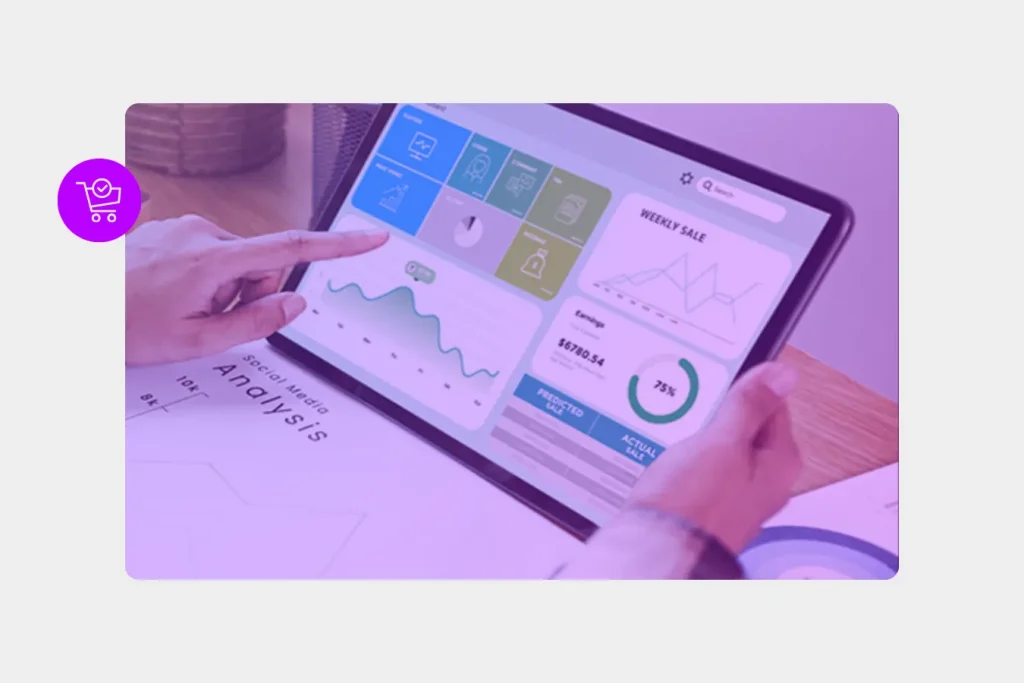
Having access to clear data is essential to knowing what is working and where you need to make adjustments. And nowadays, this data is the real gold of companies.
Essential tools:
- Google Analytics: tracks visits, conversions, traffic sources;
- Google Search Console: see how Google views your website;
- Heatmaps (e.g. Hotjar): analyses visitor behaviour on the website.
By monitoring the right data, it is possible to improve pages with low conversion rates, invest in campaigns that bring in more sales, and also optimise the purchase funnel based on the actual behaviour of real people.
All this may seem complex, but it doesn't have to be. At Apollotec, we integrate analysis tools so you can track your shop's performance in real time, without complications.
Product and Operations Management in a Successful E-Commerce Business
This is the invisible part of e-commerce. The part that few people talk about.
The website experience, abandoned shopping carts, what happens after the sale... Good operations ensure that customers receive what they have purchased, on time, with a level of service that makes them want to come back.
Stock Management
Managing inventory effectively is essential to avoid two common problems: selling out-of-stock products (which causes frustration) and excess dead stock (which ties up capital).
Good practices:
- Use a stock management system with inventory alerts;
- Automate stock updates whenever there is a new sale;
- Use banners such as ‘last units’ or ‘restocking’;
- Synchronise data from multiple channels to avoid errors.
Tools such as Odoo, Moloni, PHC, or customised solutions from Apollotec can be integrated directly with your shop and automate much of this management.
Logistics and Shipping
Shipping is one of the most sensitive parts of the operation — and often the deciding factor between conversion and cart abandonment.
Fast deliveries, fair prices, and simple return policies increase trust and satisfaction.
What you should do:
- Working with reliable carriers (CTT Expresso, GLS, MRW, DHL);
- Calculate shipping costs accurately and offer free shipping above a certain value;
- Set realistic deadlines and inform the customer at the time of purchase;
- Send automatic notifications about the status of the order;
- Have a clear and visible returns policy on the website.
Customer Service
Good customer service turns a purchase into loyalty. And in the digital world, customers expect speed, clarity and empathy, especially when there are problems.
Channels that may be available:
- Live chat or chatbot (WhatsApp, Messenger, or website integration);
- Customer support email with fast response time;
- Customer area where users can check the status of their orders, invoices, returns, etc.;
- Telephone support (optional, but valued in certain niches).
What about the RGPD?
When collecting data from your customers (name, address, email, purchase history, etc.), you are legally obliged to obtain their explicit consent, protect the data with security measures, and allow customers to view, change, or delete their data whenever they wish.
Business Management and Optimisation
As your e-commerce business grows, you will realise that managing everything manually becomes impractical.
The key to scaling efficiently lies in automation and smart integrations that free up your human resources, reduce errors, and increase consistency across all areas of the business.
Automation and Integrations
Automating processes is not a luxury, but a necessity (or almost a requirement) for companies. The more time you can save on repetitive tasks, the more you can focus on strategy, product, and customer experience.
Practical examples of automation that make a difference:
- Stock management: Automatic inventory updates whenever there is a new sale, preventing stock shortages or incorrect sales;
- Automatic invoicing: Issuing certified invoices with automatic sending to the customer's email and synchronisation with the accounting system;
- Shipping management: Integration with carriers to generate shipping labels, automatic tracking updates, and customer notifications without manual intervention.
- Chatbots and customer service: Intelligent bots that answer frequently asked questions, collect information, and transfer the customer to an operator if necessary.
- Automatic reports: You receive weekly or monthly performance reports with sales metrics, most popular products, cart abandonment, etc.
Conclusion
Creating a successful e-commerce business is much more than just putting products online. It means building a solid structure with a strategic vision, the right technology, and well-defined processes to ensure that every visitor has a good experience — and comes back.
Throughout this guide, we have explored the essential pillars for launching (or optimising) your online shop with confidence, including:
- How to choose the right niche and the most viable business model:
- What is legally required to sell online in Portugal;
- The best platforms and technical solutions (including customised ones);
- Effective marketing, SEO, and advertising strategies;
- Best practices in operations, logistics, customer service, and automation.
The truth is that there is no single path, but rather the right path for you, according to your goals, resources, and market. And that is exactly our job at Apollotec: to help you transform an idea or online store into a professional, scalable and future-proof operation.
FAQ'S
Do you need to have a company to set up an e-commerce business in Portugal?
Yes. To sell legally online in Portugal, you must set up a company or register as a Sole Trader (ENI). You must also declare your activity to the tax authorities using the appropriate CAE code for e-commerce.
How do I choose the best business model for my online shop?
It depends on your resources, product type, and objectives. You can choose to sell your own products, use dropshipping, operate in marketplaces, sell digital products, or sell by subscription. Analyse investment, margins, logistics, and control over the process.
What is the best platform for creating an e-commerce site?
There is no universal ‘best’ platform. Shopify is ideal for beginners, WooCommerce offers flexibility, Magento is suitable for large stores, and customised solutions such as those from Apollotec guarantee high performance and total customisation.
What is the difference between a ready-made platform (such as Shopify) and a customised solution?
Platforms such as Shopify are quick to implement and ideal for getting started, but they have customisation limitations and charge commissions. A customised solution, such as Apollotec's, is developed to suit your needs, with full control over features, design, integrations and no transaction fees.
What legal aspects should I consider before launching my shop?
You must ensure that you comply with the GDPR, have a privacy policy, clear terms and conditions of sale, issue certified invoices and, if applicable, licences for specific products. Consult a solicitor or accountant to ensure full compliance.
How can I attract my first customers to my e-commerce site?
Use SEO strategies, online advertising (Google Ads, Facebook Ads), content marketing, and social media. Also invest in email marketing and remarketing to maximise visitor conversion.
What payment methods should I offer in my online shop?
In Portugal, the most commonly used methods include MB WAY, Multibanco references, PayPal, Stripe (cards) and Apple/Google Pay. Offering a variety of options increases trust and conversion rates.
Is it possible to integrate my e-commerce with invoicing and management systems?
Yes. It is possible to integrate the online store with software such as PHC, Moloni, Odoo, or customised systems. These integrations automate invoice issuance and synchronise stock, customer, and sales data, reducing errors and saving time.
How can I ensure a good user experience on my website?
Invest in responsive design, organised menus, clear descriptions, high-quality images, and a simple checkout process. Website speed and mobile version are also essential.
What tools can I use to manage and automate e-commerce?
Tools such as Odoo, PHC, Moloni, or customised solutions from Apollotec assist with stock management, invoicing, shipping, customer service, and data analysis. Automation saves time and reduces errors.
What types of automation can I implement in an online shop?
You can automate various tasks, such as stock updates, sending invoices, generating shipping labels, tracking orders, abandoned cart emails, among others. These automations increase efficiency and improve the customer experience.
How can I ensure that my website is fast and secure?
Choose fast and reliable hosting with dedicated servers, SSL certificates, and automatic backups. Use a platform optimised for performance and regularly update your plugins and shop system. Apollotec ensures all these elements in its customised solutions.
Can I sell on multiple channels with the same stock?
Yes, it is possible to synchronise stock between different channels (online shop, marketplaces, physical shop) using specific integrations. This prevents sales of out-of-stock products and improves real-time inventory management.
Is it possible to integrate local and international payment gateways?
Yes. E-Commerce technical solutions allow you to integrate methods such as MB WAY, Multibanco, PayPal, Stripe, Apple Pay, among others. This means you can offer options tailored to the Portuguese market and also to international customers.
Blog
- Website12 March 2025Slow website? Here's how to fix it
- App6 March 2025Platform or App: what are the differences and which is the best option for you
- Website5 March 20255 main mistakes to AVOID when creating a website
- E-commerce12 August 2025E-commerce: Shopify, WooCommerce, or a Custom Solution? Analysis of Pros and Cons
Request a Quote
Solicita a tua proposta personalizada e descobre como as nossas soluções podem transformar o teu projeto e impulsionar os resultados da tua empresa.