Automação
Automation for Businesses: The 10 Essential Automations
A automação para empresas é essencial para poupar tempo, reduzir erros e melhorar a eficiência do seu negócio. Veja quais são as essenciais.
17 min read

There are tasks that are repeated every day, so automatically, that you don't even notice the time they take up.
Responding to emails, updating files, copying data between tools, creating folders, sending reminders.
All this seems insignificant until you add up the time it takes on a weekly, monthly or yearly basis.
The truth is that many of these tasks can already be automated. And when they are, they free up time. Not only time to produce more, but to think better.
To make decisions with more data and less stress. To create impact, rather than putting out fires.
Automation for businesses is not just a matter of efficiency, but of growth.
Reduces errors, increases consistency, and gives people space to focus on what really makes a difference.
In this article, we show you the 10 essential automations that any company should consider.
Automatic Payment Reminder Automation
To ensure effortless cash flow.
Avoiding oversights, delays, and awkward situations when collecting payments should be a priority. But this is not always easy when the task depends on manual actions and the team's memory.
With this automation, that problem disappears.
Every day, the tool scans outstanding invoices.
If any are close to their expiry date, a personalised email is automatically sent to the customer.
If the invoice is already overdue, the system sends a new reminder, this time by email and SMS, and alerts the account manager.
All this without a single manual intervention.
How this automation works in practice
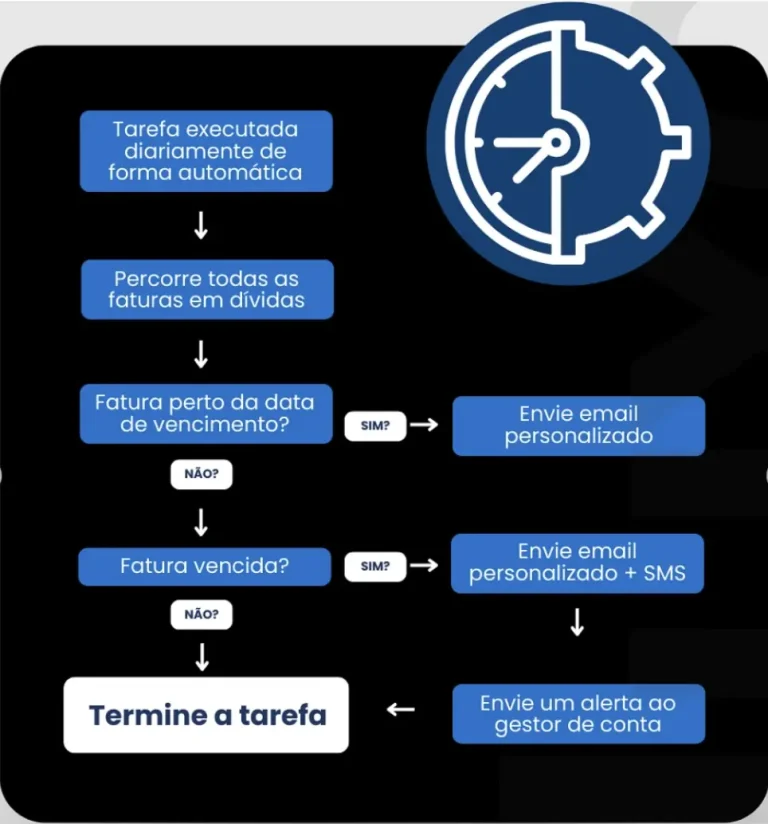
- Automation runs daily;
- Analyses all invoices and makes decisions based on the due date;
- If the invoice is about to expire ➡️ send a reminder;
- If it is already overdue ➡️ send a more urgent reminder and alert the manager;
- If no action is required ➡️ complete the task and move on to the next one.
Savings for the company
| Executions per Month | Time per Task | Time Lost Each Month | Time Lost Annually |
|---|---|---|---|
| 50 invoices | 6 minutes | 5 hours | 60 hours |
| 100 invoices | 6 minutes | 10 hours | 120 hours |
| 500 invoices | 6 minutes | 50 hours | 600 hours |
👉 Practical example: If you are performing this task 100 times a month, you are wasting around €1,800/year in time and resources*.
*Estimated value based on an average cost of €15/hour (may include salary costs, bonuses, structure, etc.)
Customer Onboarding Automation
Every new customer is an opportunity.
But it is also a repetitive task: sending the welcome email, explaining the next steps, sharing links, documents, deadlines.
When this process is manual, there is always room for oversights or delays.
With the right automation, this no longer happens.
From the moment a deal is marked as ‘won’ in the CRM, the system checks whether the customer has made previous purchases.
If it is your first time, you will receive a fully personalised onboarding email with all the information you need to get off to a good start.
How this automation works in practice
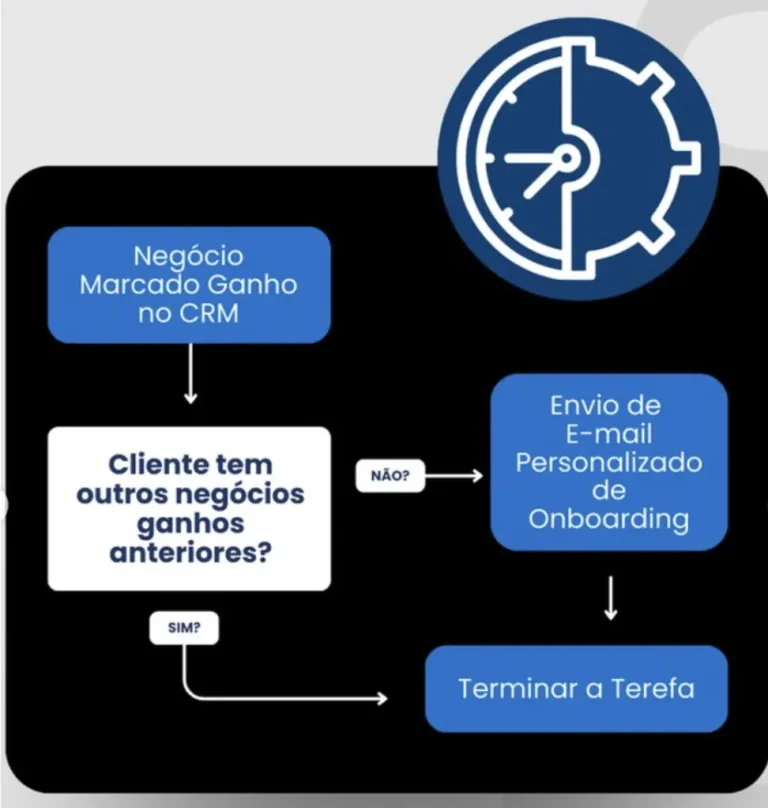
- A deal is marked as won in the CRM;
- The automation checks whether the customer already has other previous transactions;
- If not, send a welcome email with all the necessary information;
- If you are already a customer, you do not need to send anything and the task will be completed automatically.
Savings for the company
| Executions per Month | Time per Task | Time Lost Each Month | Time Lost Annually |
|---|---|---|---|
| 10 | 15 minutes | 2:30 hours | 30 hours |
| 20 | 15 minutes | 5 hours | 60 hours |
| 30 | 15 minutes | 7:30 horas | 90 hours |
👉 Practical example: If you receive 20 new customers per month, you are wasting around €300/year in time and resources*.
*Estimated value based on an average cost of €15/hour (may include salary costs, bonuses, structure, etc.)
Automated Customer Setup in Drive via CRM
Creating folders manually is one of those small tasks that, when done often, takes up more time than you might think.
And worse: they are prone to errors, oversights, or duplications.
With this automation, that is no longer a problem.
As soon as a field is updated in CRM (for example, when a deal changes to ‘won’), automation checks whether there is already a folder associated with the customer in Drive.
If it does not exist, it automatically creates a new folder in the right place without anyone having to go there.
Everything stays organised, up to date and flawless.
How this automation works in practice
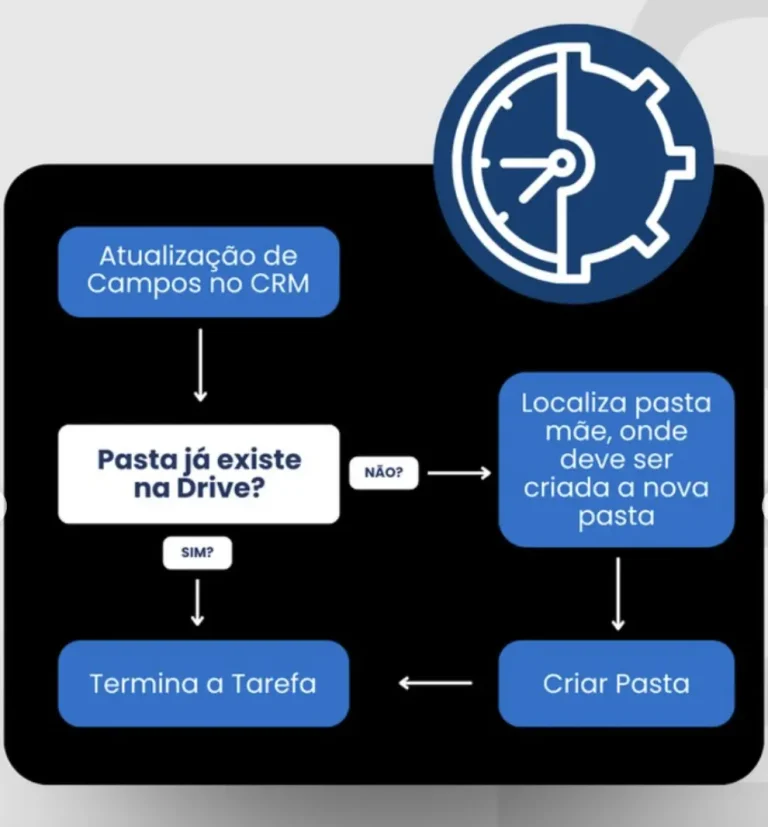
- A field is updated in the CRM;
- The automation checks whether a folder already exists in Drive;
- If it does not exist, locate the main folder and create the new folder automatically;
- If it already exists, the task is complete. No effort, no mistakes.
This integration between CRM and Drive can be done with tools such as Zapier, Make, or n8n, and works with almost all CRMs and cloud systems.
Savings for the company
| Executions per Month | Time per Task | Time Lost Each Month | Time Lost Annually |
|---|---|---|---|
| 50 | 3 minutes | 2:30 hours | 30 hours |
| 100 | 3 minutes | 5 hours | 60 hours |
| 500 | 3 minutes | 25 hours | 300 hours |
👉 Practical example: If you perform this task 100 times a month, you are wasting around €900/year in time and resources*.
*Estimated value based on an average cost of €15/hour (may include salary costs, bonuses, structure, etc.).
Automation of Employee Holiday Management
Managing holidays seems simple. But between emails, messages, Excel spreadsheets, and approvals that get lost, it's easy to create confusion or even conflicts between dates.
With well-designed automation, all of this can be resolved clearly, quickly, and without repetitive tasks.
As soon as an employee fills out the holiday request form, the system automatically records the information, checks for conflicts (if applicable) and sends the request for approval.
After validation, the team is notified, the schedule is updated, and the employee receives confirmation. All without manual intervention.
How this automation works in practice
- The employee fills out a holiday form;
- The request is automatically sent for approval;
- If approved, a confirmation email is sent and the absence record is updated;
- If rejected, an email is sent with instructions on how to reschedule.
Savings for the company
| Executions per Month | Time per Task | Time Lost Each Month | Time Lost Annually |
|---|---|---|---|
| 5 | 10 minutes | 50 minutes | 10 hours |
| 10 | 10 minutes | 1:40 hours | 20 hours |
| 20 | 10 minutes | 3:20 hours | 40 hours |
👉 Practical example: If you receive 20 holiday requests per month, you are wasting around €300/year in time and resources*.
*Estimated value based on an average cost of €15/hour (may include salary costs, bonuses, structure, etc.).
Automation of Employee Onboarding and Offboarding
Whenever someone joins or leaves the company, there are dozens of small tasks to complete: creating or removing accesses, sending welcome or farewell emails, sharing documents, preparing contracts, updating databases.
The problem? When done manually, the process is too time-consuming and it is very easy for some detail to be overlooked, putting your company's sensitive data at risk.
With this automation in your company, all of this can happen safely, quickly, and consistently, from the first day to the last.
How this automation works in practice
- When an employee is registered or removed from the system, automation is activated;
- During onboarding, create accesses, send the welcome kit, and schedule emails with the first steps;
- During offboarding, remove access rights, archive documents, and send an exit email with thanks or final instructions.
- Everything is documented, with automatic notifications to HR and IT.
Savings for the company
| Executions per Month | Time per Task | Time Lost Each Month | Time Lost Annually |
|---|---|---|---|
| 5 | 30 minutes | 2:30 hours | 30 hours |
| 10 | 30 minutes | 5 hours | 60 hours |
| 20 | 30 minutes | 10 hours | 120 hours |
👉 Practical example: If you hire or dismiss employees 10 times a month, you are wasting around €900/year in time and resources*.
*Estimated value based on an average cost of €15/hour (may include salary costs, bonuses, structure, etc.).
Automation of Commercial Proposal Creation
To create, send, and track with minimal effort, without losing the customer.
Creating proposals can be one of the most critical (and time-consuming) tasks in any business process.
Copying data, filling in templates, validating prices, exporting PDFs, attaching and sending. All of this takes up valuable time and is prone to errors.
With well-tuned automation, you can generate, customise, and send proposals in seconds with up-to-date data and a professional appearance.
How this automation works in practice
- When an opportunity reaches a certain stage in the CRM (e.g., “request for proposal”), automation is triggered.
- Customer and project data are automatically pulled from the CRM;
- The proposal is generated in a predefined template (PDF, Google Docs, or other);
- The document is sent to the customer by email and the sales representative receives a notification for follow-up.
This ensures that proposals are sent on time, without errors and with greater guarantees of closure.
Savings for the company
| Executions per Month | Time per Task | Time Lost Each Month | Time Lost Annually |
|---|---|---|---|
| 10 | 20 minutes | 3:20 hours | 40 hours |
| 20 | 20 minutes | 6:40 hours | 80 hours |
| 30 | 20 minutes | 10 hours | 120 hours |
👉 Practical example: If you send 20 proposals per month, you could be wasting around €1,200/year in time and resources*.
*Estimated value based on an average cost of €15/hour (may include salary costs, bonuses, structure, etc.).
Stock Management Automation
Avoid stockouts and excess inventory with automatic alerts.
Managing stock manually is a recipe for chaos.
Either products are missing at the wrong time, or there is stagnant merchandise that takes up space and ties up capital.
And in the midst of all this, time is wasted on tasks such as counting units, updating spreadsheets, or sending internal emails.
The good news is that all of this can be automated.
With well-structured automation, the system tracks stock in real time, sends alerts whenever levels fall below the limit and, if necessary, automatically creates replenishment orders based on the rules you define.
How this automation works in practice
- Stock is continuously monitored through integrations with the sales or warehouse system:
- When a product reaches the minimum limit, an automatic alert is sent to the person responsible;
- If you wish to configure this option, you can also generate a replenishment request or notification to the supplier.
- Everything is recorded and updated without the need for manual intervention.
Savings for the company
| Executions per Month | Time per Task | Time Lost Each Month | Time Lost Annually |
|---|---|---|---|
| 20 | 10 minutes | 3:20 hours | 40 hours |
| 50 | 10 minutes | 8:20 hours | 100 hours |
| 100 | 10 minutes | 16:40 hours | 200 hours |
👉 Practical example: If you need to make 50 stock updates per month (for different products, shops, marketplaces, etc.), you could be wasting around €1,500/year in time and resources*.
*Estimated value based on an average cost of €15/hour (may include salary costs, bonuses, structure, etc.).
Social Media Engagement Automation
Keep your online presence active and never leave anyone without a response.
Posting on social media is the easiest part. The real work comes from community management.
Respond to messages, read comments, or comment on other profiles to maintain high reach.
Yes, social media has its own science, and it is essential not to lose sight of interaction.
That is why doing all this manually can lead to inaccurate results.
With automation, you can maintain an active presence, schedule posts, respond to basic interactions, and even identify opportunities to contact the hottest leads.
How this automation works in practice
- Content is created in advance and added to a scheduling tool;
- Automation ensures publication on multiple platforms at the same time, at the ideal times;
- You can also identify comments with specific keywords (e.g., “price” or “interested”) and alert the sales team.
- It also allows automatic responses to frequently asked questions via DM or Messenger.
It's the easiest way to ensure your brand remains visible, without relying on inspiration of the moment or spending a lot of time responding to comments and messages.
Savings for the company
| Executions per Month | Time per Task | Time Lost Each Month | Time Lost Annually |
|---|---|---|---|
| 20 | 15 minutes | 5 hours | 60 hours |
| 40 | 15 minutes | 10 hours | 120 hours |
| 60 | 15 minutes | 15 horas | 180 horas |
👉 Practical example: If you publish and manage interactions 40 times a month, you could be wasting around €1,800/year in time and resources.
*Estimated value based on an average cost of €15/hour (may include salary costs, bonuses, structure, etc.).
Automation for Expense Control
How often do you let your receipts pile up until it's impossible to tell where the money was spent?
Do you waste time manually entering expenses into Excel or accounting software?
Automating expense management gives you a clear, up-to-date view of your company's spending, with fewer errors, less paperwork, and more time to analyse what really matters.
How this automation works in practice
- Whenever a new invoice or receipt is received by email, automation kicks in;
- The system automatically extracts the data (amount, supplier, date, category) and records the expense in a database or management software;
- You can also send a monthly summary with totals by category or alerts when there are budget deviations.
This ensures that your expenses are always organised in real time, without the need for manual entry or losing track of costs.
Savings for the company
| Executions per Month | Time per Task | Time Lost Each Month | Time Lost Annually |
|---|---|---|---|
| 50 | 5 minutes | 4:10 hours | 50 hours |
| 100 | 5 minutes | 8:20 hours | 100 hours |
| 200 | 5 minutes | 16:40 hours | 200 hours |
👉 Practical example: If you record 100 expenses per month, you could be wasting around €1,500/year in time and resources.*.
*Estimated value based on an average cost of €15/hour (may include salary costs, bonuses, structure, etc.).
Customer Service Automation
For level 1 support, which automatically qualifies requests and focuses the team on what matters.
When your inbox fills up with repetitive questions like “what is the delivery deadline?” or “what are your opening hours?”, there’s a clear opportunity: automate.
With an automated service system, you can instantly respond to common questions, collect basic customer information, and forward only the most complex cases to the team. It's a great way to save time and energy while ensuring faster responses for customers.
How this automation works in practice
- The customer sends an email, fills out a form, or initiates a conversation via chatbot.
- Automation checks whether the question relates to frequently asked topics and responds automatically based on a knowledge base.
- If it is a more complex issue, collect the necessary information (name, contact details, description of the problem) and forward it to the appropriate person.
- All this happens in seconds, even outside business hours.
Savings for the company
| Executions per Month | Time per Task | Time Lost Each Month | Time Lost Annually |
|---|---|---|---|
| 50 | 3 minutes | 2:30 hours | 30 hours |
| 100 | 3 minutes | 5 hours | 60 hours |
| 200 | 3 minutes | 10 hours | 120 hours |
👉 Practical example: If you manually respond to 100 requests per month, you could be wasting around €900/year in time and resources.*.
*Estimated value based on an average cost of €15/hour (may include salary costs, bonuses, structure, etc.).
Automation for Businesses: The Best Way to Scale Up
Automating processes is no longer a technological ‘extra’ but has become a real competitive advantage.
Throughout this article, you have seen how automation for businesses can help save time, reduce errors, increase productivity, and give your team more space to focus on what really makes a difference: better serving customers and growing the business.
If you implement just one of these essential automations we have listed (such as payment reminders, customer onboarding, or expense control), you will already feel a direct impact on your day-to-day operations.
Now, imagine what happens when they all work together.
The truth is that automation and artificial intelligence have not replaced people.
They came to free them.
To think, create and lead with more strategy and fewer repetitive tasks.
Would you like help creating automations for your company?
Schedule a 30-minute meeting with our expert. We will analyse your processes and identify what can be automated today.
FAQ'S
What is automation for businesses?
Automation for businesses is the implementation of systems and tools that perform repetitive tasks automatically, such as sending emails, creating folders, recording data or managing stock, saving time and reducing errors.
What are the essential automations for a company?
Automation for businesses is the implementation of systems and tools that perform repetitive tasks automatically, such as sending emails, creating folders, recording data or managing stock, saving time and reducing errors.
How can automation help with invoice collection?
Automation allows reminders to be sent automatically before and after invoices are due, via email and SMS, also alerting the account manager, without the need for manual action.
How does customer onboarding automation work?
As soon as a deal is marked as won in the CRM, the system checks whether it is a new customer and, if so, automatically sends an email with all the information needed to start the relationship.
Is it possible to integrate CRM with Google Drive?
Yes. You can set up automations so that when a deal changes status in the CRM, a new folder is automatically created in Drive, keeping everything organized and up to date.
How does automation improve expense control?
Expenses are automatically recorded when a receipt is received by email. The system extracts the data and updates the database or management software, also generating monthly reports.
Can automation help with vacation management?
Yes. Vacation requests are made using a form, automatically reviewed, and sent for approval. After validation, the system updates the records and notifies everyone involved.
Is it possible to automate the creation of commercial proposals?
Yes. When the CRM reaches a specific stage, the data is automatically pulled, the proposal is generated based on a template, and sent by email to the customer with notification to the sales representative.
What is the financial impact of automation?
Depending on the task, automation can save hundreds of hours and thousands of dollars per year by reducing manual time spent and preventing operational errors.
Does automation replace employees?
No. Automation frees employees from repetitive tasks, allowing them to focus on strategic and creative activities that generate more value for the company.
Request a Quote
Solicita a tua proposta personalizada e descobre como as nossas soluções podem transformar o teu projeto e impulsionar os resultados da tua empresa.