Automação
Process Automation: What It Is and Its Benefits (with examples)
Descubra o que é a automação de processos, os principais benefícios e exemplos práticos para aplicar já na sua empresa.
11 min read
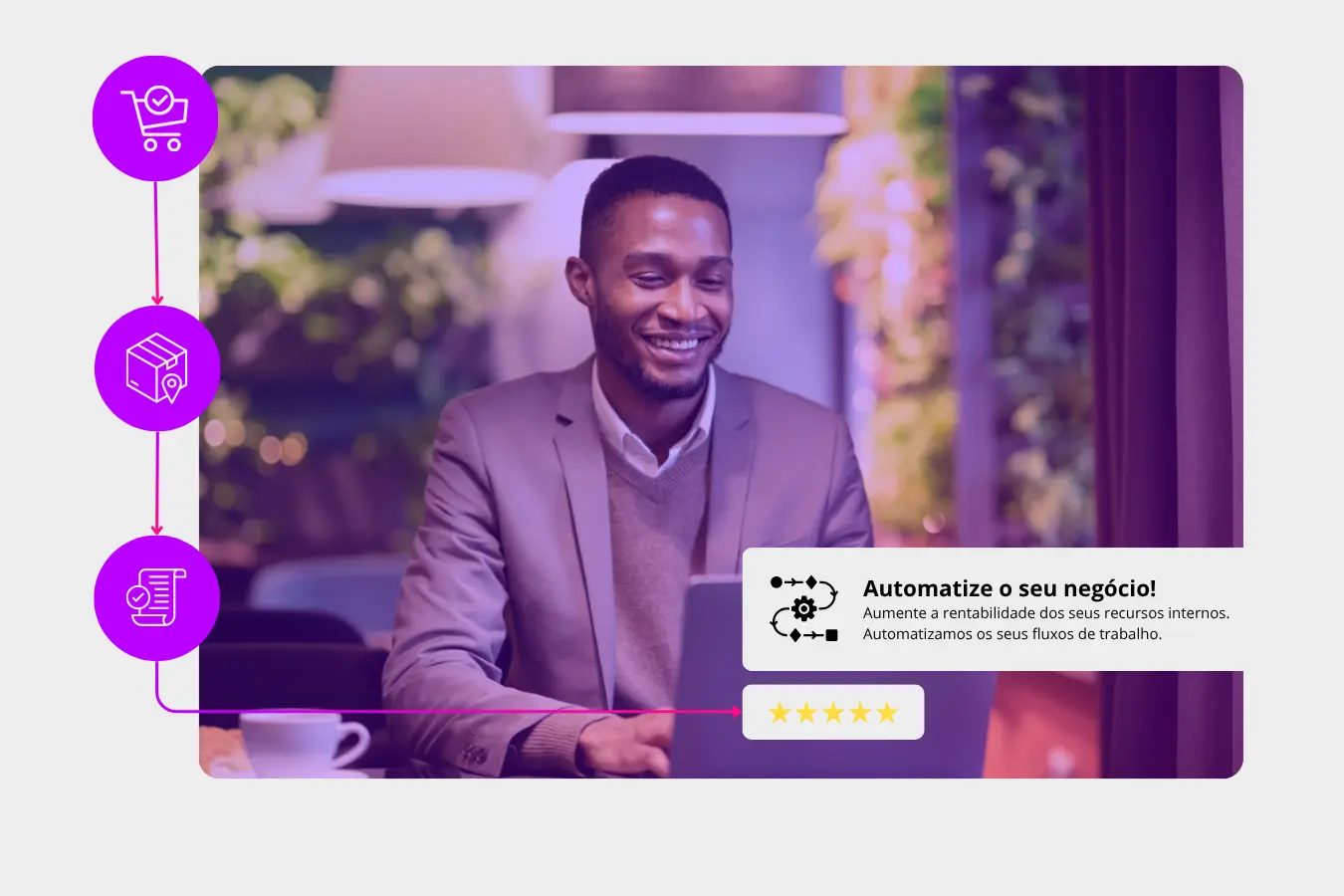
Every day, thousands of companies waste time and money on repetitive tasks that could actually be happening on their own.
This is where process automation comes in. A solution that allows you to transform manual routines into automatic, simple and scalable flows.
Imagine being able to reduce human error, speed up internal tasks, and free up your team to focus on what really matters.
It is no longer just a question of efficiency. It becomes a competitive advantage.
If you still see automation as something complex or reserved for large companies, this article will change your perspective.
In this article, we show you what process automation is, its practical benefits, and how it can be applied in different areas of your company.
And if you ultimately feel that it is time to optimise processes that are consuming too much of your time, our team is ready to create a tailor-made solution for you.
What is Process Automation?
When it comes to automation, many companies immediately imagine a system sending emails or a robot responding to messages.
Although these actions are valid, they represent only a small part of what process automation can do.
Automating processes is not just about replacing a manual task with a digital tool.
It is rethinking the entire workflow.
It is about creating an intelligent system where each step happens at the right time, with the right person, and without unnecessary errors.
In practice, this means mapping the tasks that are repeated in your company, identifying points of failure or waste, and creating an automated workflow that frees up time, reduces costs, and increases productivity.
All this without losing control.
Process automation is, above all, a way to give your company structure, efficiency, and scalability.
And if you still don't know where to start, schedule a chat with our team. We can help you identify the most critical processes and propose simple solutions to automate your daily routine.
Process Automation in Practice: how everything is interconnected
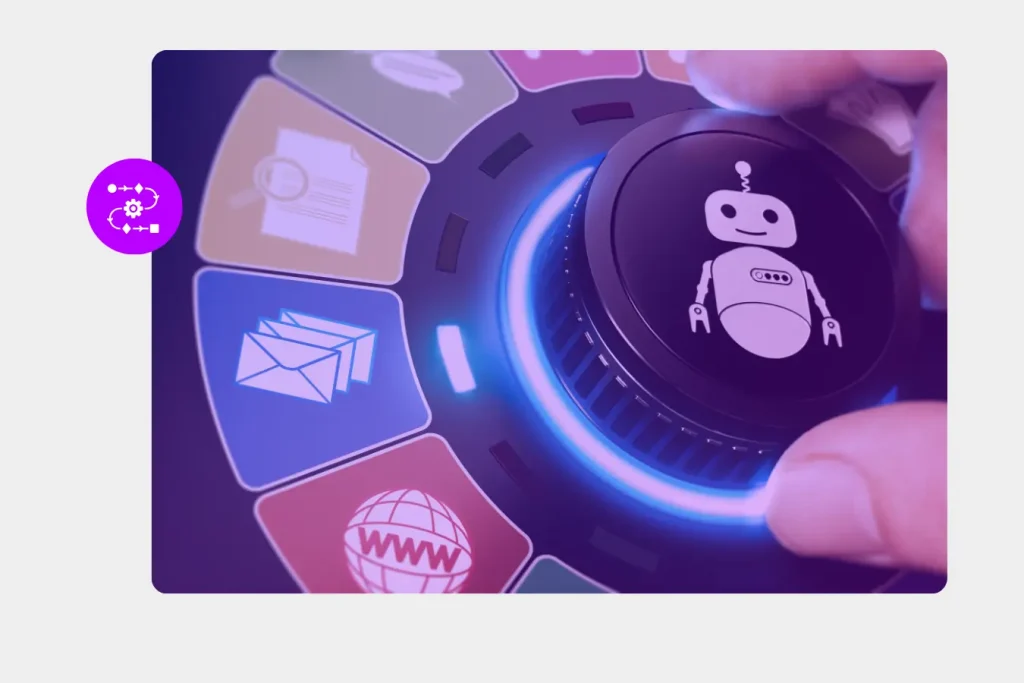
Imagine an orchestra where every musician plays at the right time, with precision and harmony.
Now, apply this idea to your company.
That is what process automation enables: creating integrated workflows, where all parts of the business work in harmony.
It's not just about speeding up tasks.
It is about ensuring that each action logically and automatically leads to the next step.
From the first contact with the customer to product delivery, including invoicing, notifications, and results analysis.
Everything happens with minimal human effort.
Automation makes it possible to centralise information, communicate between departments, and eliminate communication failures or oversights that often prove costly.
And the best part? Everything can be monitored in real time, with automatic alerts and reports to assist in decision-making.
When your processes are aligned and optimised, your company not only saves time, but also gains strategic insight.
Why Process Automation will become indispensable
Today, those who continue to rely on manual processes lose more than just time: they lose competitiveness, agility and, often, business opportunities.
Process automation is no longer a technological luxury, but a strategic necessity.
In a market where consumers expect speed, personalisation and immediate responses, there is no room for mistakes, oversights or delays.
In addition, operating costs increase when teams spend time on repetitive tasks instead of focusing on what really makes the company grow.
Automation allows you to reduce this waste and transform hours of work into minutes (or even seconds).
Another essential point is scalability. As the company grows, manual processes become unsustainable. Automating allows for consistent growth without compromising service quality.
If you want to prepare your company for the future, process automation is not just an option. It is an inevitable step.
Benefits of Process Automation for Your Company
More Productivity
When processes are automated, your team no longer wastes time on repetitive tasks and can focus on what really generates value.
Imagine how many hours per week are spent manually entering data, resending invoices, or checking orders. With automation, these tasks no longer weigh on your daily routine and are performed in the background, with greater speed and accuracy.
The result is a more focused, motivated, and productive team.
What's more, it's a team that has time to innovate, create solutions and offer a more human and strategic service to customers.
Automating processes does not mean replacing people. It means giving them the right tools to do their jobs better, with less effort and more impact.
If you want to unleash your team's potential, start by freeing them from work that can (and should) be done automatically.
Simpler Communication
Communication between departments, customers, and suppliers is one of the areas where the most time and opportunities are lost.
Emails that go unanswered, tasks that get forgotten, messages that get lost between platforms.
All of this leads to delays, rework and frustration.
With process automation, communication no longer depends on someone's memory or goodwill.
Each stage generates automatic notifications, real-time updates and clear information flows, ensuring that everyone knows what is happening, when and why.
By integrating systems and channels into a single flow, the margin for human error and misunderstandings is drastically reduced. This improves collaboration between teams, customer relations, and the smooth running of your day-to-day operations.
More Control and Responsibility
How often do questions such as ‘who is responsible for this?’ or ‘has it been done yet?’ arise within your company?
In environments with distributed tasks and multidisciplinary teams, lack of clarity can lead to delays, duplication of work, and critical failures.
Process automation solves this problem by objectively defining who does what and when.
Each task is assigned automatically, with defined deadlines and execution records.
Nothing goes unnoticed. Everything is recorded.
In addition, it allows you to view progress in real time and quickly identify bottlenecks or blockages. This gives you more control over your processes, allows you to act quickly, and increases team accountability.
More than just distributing tasks, automation helps to create a culture of commitment and transparency.
Real-Time Monitoring
When processes are manual, control is limited. Often, you only realise something has gone wrong when it is too late.
With process automation, each step of the workflow is visible and can be documented.
You can see in real time what is happening, where the bottlenecks are, and which tasks are pending or completed.
This visibility enables faster and more informed decision-making.
Instead of managing in the dark, you now have clear dashboards, automatic alerts, and reports ready at any time.
Lower costs
Manual tasks are, by nature, slower, more expensive, and more prone to errors.
A wrongly entered number, a forgotten shipment or a duplicate invoice may seem like minor details, but they add up and can be costly.
Process automation eliminates most of these risks. Everything that can be systematised is executed with precision, always in the same way, without distractions or oversights.
This will reduce the time spent per employee, duplicate work, and improve the quality of service provided. At the same time, it allows the company to do more with less, without the need to constantly increase the team.
Instead of investing resources in tasks that do not scale, automation allows you to channel that investment into innovation, growth, and customer service.
Best Customer Experience
At the end of the day, anything that improves your internal processes is reflected in the experience you offer your customers.
When automation is in place, requests are handled more quickly, responses arrive without delay, errors are reduced, and communication becomes more fluid. This builds trust and satisfaction.
And we all know what happens with satisfied customers: they come back and recommend us to others.
For example, an automated onboarding process ensures that every new customer receives all information clearly and consistently.
An automatic notification system prevents any uncertainty about deadlines.
And a well-structured support flow speeds up problem resolution.
In other words, by optimising what happens within your company, you are also building a stronger and more reliable brand for those outside it.
And if you want to improve your customers' experience without increasing your team's workload, automation is the best way to go.
Examples of Process Automation in Different Areas
Human Resources Automation
What if holiday management were more efficient?
The Human Resources department is one of the departments that can benefit most from process automation. Here, small tasks quickly pile up and consume the team's valuable time.
With automation, it is possible to streamline the entire process of integrating new employees.
From the automatic sending of documents and contracts to the creation of accesses, scheduling of training courses or sending of welcome materials. Everything happens at the right time, without failures or oversights.
Another clear example is holiday management.
Instead of endless email exchanges, you can implement a system where the employee submits the request, the manager approves it, and the team is notified. Everything happens automatically, with centralised recording and total transparency.
By automating these administrative tasks, HR gains time to focus on what really matters: caring for people, strengthening the company culture, and supporting sustainable business growth.
Automation of the Finance Department
Imagine automating the sending of invoices as soon as a sale is completed.
Or schedule automatic reminders for late payments, without the team having to manually follow up on each case.
These small flows make a huge difference in everyday life.
It is also possible to integrate invoicing systems with the bank or accounting platforms, eliminating duplicate tasks and ensuring that all transactions are correctly recorded.
What if you could control your expenses automatically as well?
With an automated system, you can approve and classify expenses with just a few clicks, centralising everything in one place, with reports ready at any time.
Essentially, finance ceases to be a centre for manual tasks and becomes a centre for strategic analysis, with up-to-date data, more free time and much less room for error.
Sales Automation
Do you agree with us that one of the biggest challenges in sales is follow-up?
How many opportunities are lost due to a lack of follow-up or responses that take too long?
With process automation, this problem ceases to exist.
As soon as a lead fills out a form or shows interest in a product, the system can classify them, assign them to a salesperson, and even start sequence of personalised emails, all automatically.
You can also create reminders for future contacts, send proposals automatically, and notify the team when the customer opens an email or visits the website again.
By automating these actions, sales teams can focus on what really matters: closing deals and building relationships. Instead of wasting time on administrative tasks, they have more energy to convert leads into customers.
And more than speed, this process brings consistency. Each opportunity receives the right follow-up at the right time.
Automation in Customer Support
Good customer service starts with how quickly you respond. And that's exactly where automation can make all the difference.
With an automated system, you can respond immediately to frequently asked questions through chatbots. chatbots, forward requests to the right person, and even automatically open tickets depending on the type of request.
And believe me, you don't even need to look like a robot!
If a customer requests assistance outside of business hours, they may receive an automated response with turnaround times, helpful suggestions, or even links to support articles. This type of experience prevents frustration and demonstrates professionalism from the very first contact.
In addition, you can centralise all interactions, track each customer's history, and measure satisfaction with automatic questionnaires sent after service.
The result is a faster, more organised and effective service. And a support team that gains time to resolve the most complex cases with attention and quality.
Conclusion
Process automation is no longer a trend. It is a reality that is transforming the way companies work, communicate, and grow.
Companies that automate save time, reduce errors, improve the customer experience, and free up their teams for tasks that truly add value.
If you want to prepare your company to scale efficiently and compete in an increasingly demanding market, the time to act is now. The sooner you start, the faster you will reap the rewards.
FAQ'S
What is process automation and how does it work?
Process automation consists of transforming manual and repetitive tasks into automatic, organised and efficient flows. It goes beyond simple digitisation: it involves rethinking the entire workflow so that each action happens at the right time, with minimal human intervention and greater control.
What are the main benefits of automation for a company?
Key benefits include increased productivity, more efficient communication, reduced errors, greater control and accountability, real-time monitoring, and reduced operating costs. All of this contributes to a superior customer experience and a team that is more focused on what really matters.
Which areas of the company can be automated?
Practically all of them. Examples include Human Resources (holiday management and onboarding), Finance (invoicing and expense control), Sales (automatic lead tracking) and Customer Support (chatbots and ticket management).
Does automating processes mean replacing people?
No. Automation is not intended to eliminate people, but rather to free them from repetitive tasks that add no value. This allows them to focus on more strategic, creative, and human activities.
How do I start implementing automation in my company?
The first step is to identify repetitive, manual, and error-prone processes. Then, with the help of experts, you can map these processes and create customised solutions that integrate with existing systems, ensuring a smooth and effective transition.
Blog
- Automação26 August 2025Technology Stack for E-commerce: Complete Guide to Success
- Automação5 August 2025Email Marketing Automation for E-Commerce: What it is and why it will be your best investment
- Automação29 July 2025Chatbot for E-commerce: The New Generation of Online Customer Service
- Automação24 July 2025E-commerce Launch Checklist: Ensure your e-commerce site is ready to sell
Request a Quote
Solicita a tua proposta personalizada e descobre como as nossas soluções podem transformar o teu projeto e impulsionar os resultados da tua empresa.